
I am Ungit
What does it mean to truly love?
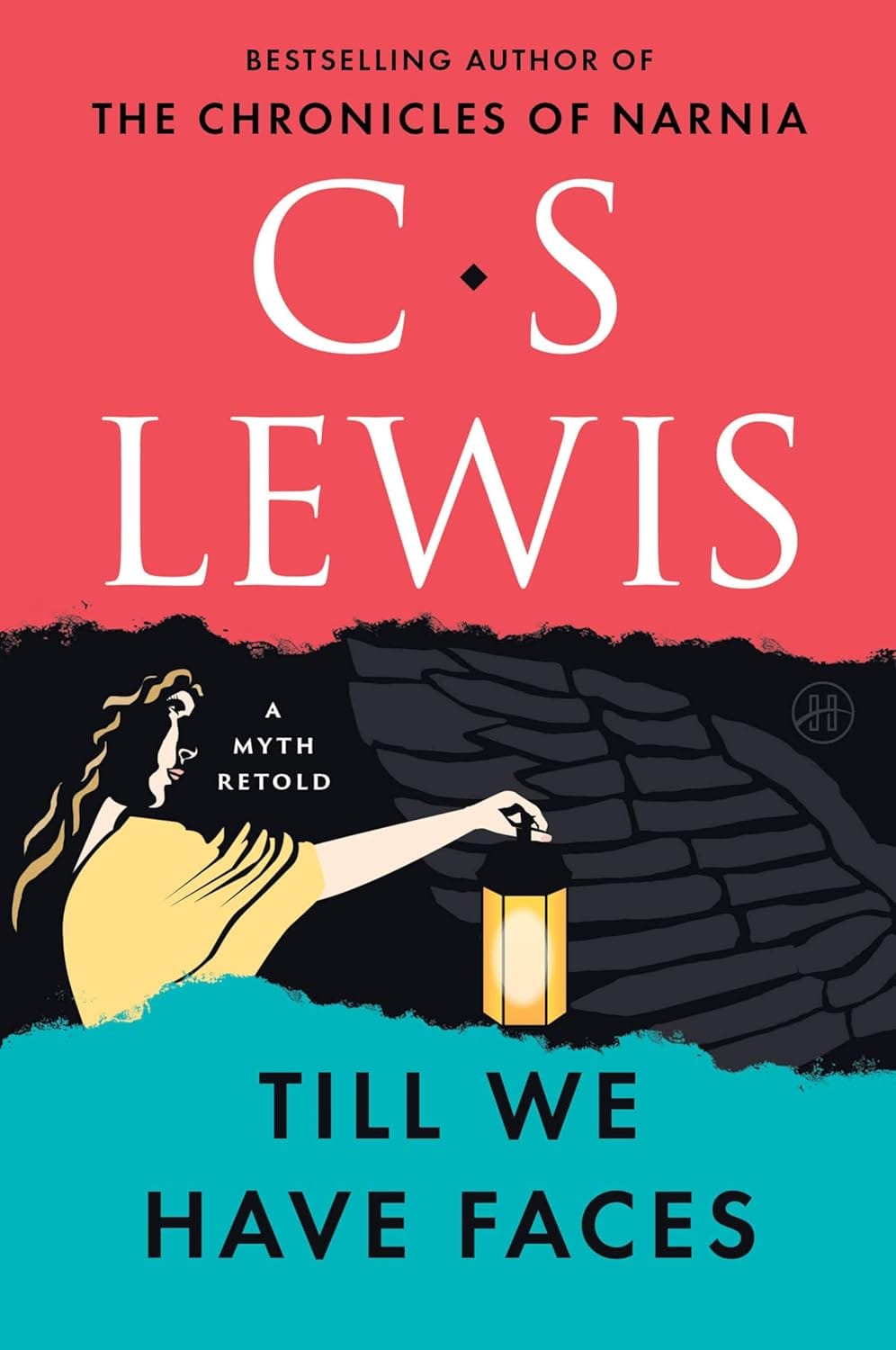
I recently finished re-reading C.S. Lewis's Till We Have Faces. Many themes run throughout the book – the relationship between faith and knowledge, the way in which the unseen realm touches the seen one, the influence of family, the danger of over-trusting memory. Perhaps the most salient theme of all in the book is the question: what is the nature of true love?
In the tale of Till We Have Faces, Lewis introduces us to disordered love through the retelling of the classic story of Psyche and Cupid from the perspective of Psyche’s sister, Orual. While it appears in many places – the king's relationships with his wives and daughters, the lustful seed-wasting confines of Ungit's temple, and the legend and lore of the Shadowbrute, he chiefly tells it in the life of Orual. Her tale shows the corruption of the four loves: storge, philia, eros, and most profoundly – agape.
Redival - The Neglected Daughter
Redival represents storge and her neglect, the corruption of it. Redival is Orual's younger sister and her only full sister. Initially she is the most desirable for her 'golden curls,' which she loses at the death of her mother. More than anything, she represents the life lived without the familial love of storge. Her mother dies. Her father is a tyrant. Tarin the Eunuch describes her as having been lonely because after the Fox came she was overlooked and after Psyche she was outshone. This left her void of the storge she should have received, chiefly from her mother and father, but also from her sister Orual, who increasingly finds a hatred for her sister as Redival learns to fumble through a world lacking this most formative of loves.
The Fox - The Bonded Greekman
The Fox represents philia and Orual's keeping of him, the corruption of it. The Fox came into Orual's life as a slave. Her father the king acquires him in the hope of training up a son, and the Fox becomes the primary educator of Orual and Psyche. He is ever present with Orual from her youth until she comes into her own as queen despite her many missteps and flaws. And it is at this moment that Orual corrupts philia. When the king is near death and Orual is acting as a sort of vicar for the royal family, one of her first orders of business is to set the Fox free from his slavery. Yet upon the pronouncement she enslaves him again. Not through the legal mechanism of slavery but through her love. Rather than rejoicing that this one with whom she has come to have a shared vision of the world is free, she shrinks from the idea that he might use his newfound freedom to return to the Greeklands, which she knows he loves and so desperately misses. She binds him to herself with her love for him and the sorrow birthed from it. Orual, confessing to the Fox, says she “lapped up all you gave me like a thirsty animal.”
Bardia - The Forbidden Love
Bardia represents eros and Orual's desire for him, the corruption of it. Bardia was a man deeply in love with and devoted to his wife, Ansit. So much so that he took ridicule on himself marrying her unendowed. His whole life he was fervently devoted to her to the point that even after eight children and old age, Ansit had no need to keep ugly slaves. He is properly ordered eros. In contrast to this, Orual's desire for him is, in some ways, the least ordered of her loves.
Psyche - The Sacrifice of Love
Psyche represents agape and Orual's idolizing of her, the corruption of it. Psyche appears as a force of pure goodwill early on in the story, destined to be the object of divine affection. She has an unmatched and nearly unfathomable beauty that she joyfully shares with all around her. And she shares it not only in letting those around her rejoice in it but in lending it. Orual says she turns the rain itself into silver. When a plague strikes the kingdom in which she lives, she, nearly to the point of death, goes about so that the townsfolk may touch her in the hope that the sickness will leave them. When the good of the kingdom calls for her sacrifice to the Shadowbrute, she both believes what is best, that she is going to be the bride of a god, and is prepared to sacrifice herself if it is the worst. In contrast to this we find Orual, in her final complaint to the gods, saying, 'The girl was mine. What right had you to steal her away into your dreadful heights?' This comes in response to her being given to the god of the mountain, Eros – the god that is the embodiment of passion, pleasure, and romance.
Of course, Orual’s relationship to Psyche also represents the other corrupted side of storge masquerading as agape. Whereas Redival represents a neglect of storge, Psyche represents the controlling impulse that devours by controlling the object of its desire. We see this clearly in the house of Ungit. In Glomic mythology, Ungit is Aphrodite, the mother of Cupid. She initially appears as a faceless, almost formless sort of rock that the people believed pushed forth through the earth and, in so doing, represents motherhood as the source of life. And yet, the story represents her as a controlling mother, wanting to have control over every detail and desire of those under her. We see this both in the way that the story describes her house as warm and oppressive and ‘holy,’ and in the way that she acts throughout the story. Her jealousy over Psyche, whom the people admire almost to the point of worship, leads to cruelty in the land, where Ungit sends plagues, lions, famine, and war. Only a sacrifice of the one whom the people love placates her. She must have total control, a smothering control, a consuming control. This is, of course, the way that Orual relates to Psyche. In the palace of the god of the mountain, over and over, irrespective of what Psyche knows to be true, Orual demands that she obey, she obey, she obey.
Ungit - Love Inwardly Bent
In contrast to the king, who lacks all loves, Orual discovers that she is Ungit – the 'all-devouring womb-like thing, yet barren,' the basest form of a corrupted storge. Hers is not a love that looks to the good of those under its influence, nor does it rejoice in the good that they receive. It is a love that is unchecked by charity towards others and considers chiefly what it delights in. And in so being, the loving becomes the consuming. And this is paradigmatic of all the corruptions: desiring the Fox for his counsel and the comfort that he brings rather than for the reality that he's a human; corrupting her view of and actions towards Redival, the initially pretty one with her golden locks; desiring Bardia with an unchecked desire that longs for what it cannot have and tries as best it can both to steal what is not hers and to ruin the rightly ordered love he has at home; and most clearly of all, Psyche – the one whom she claims to love most, yet who was reduced to the chief and prized possession of her own comfort and happiness. Orual is not concerned chiefly with Psyche's joy and comfort, but above all, her own. In the end, it costs Psyche everything for a season.
It is near the pinnacle, though not at it, that Lewis forces the reader to utter the words, 'I am Ungit.' And this, sadly, is the case. We find in ourselves the reality that we are Ungitic. Our so-called love, which should rejoice in others, rejoice in their joy, desire the best for them and seek it, instead consumes. We find in the story the sad reality that we are Orual. All the loves we find in ourselves carry the taint of Ungit – the ever-present desire and drive to consume and take from those we ought to serve.
The Cure
What is to be done and what is the cure? Who will rescue Orual and remove this curse? The answer is true agape. Divine love must touch her and reassure her. After she sees her true estate and falsehood towards the ones she loves in her complaint to the gods, the god of the mountain tells her, rather strikingly – 'You also are Psyche'. Yet Psyche is his long-awaited beloved returned to him. The one driven away by love corrupted. It was this same voice that earlier said, 'You also shall be Psyche,' to initiate her journey of stripping away that corruption.
The answer for you and me is the same. We must take the long painful look inward and see the broken reality – the taking off of the mask. It is then we will see the hope of escaping and being changed is divine love. It is to look at the table, where we see the Lord Jesus. We read the words, “Now as they were eating, Jesus took bread, and after blessing it broke it and gave it to the disciples, and said, ‘Take, eat; this is my body.’ And he took a cup, and when he had given thanks he gave it to them, saying, ‘Drink of it, all of you, for this is my blood of the covenant, which is poured out for many for the forgiveness of sins.'” True divine love. Instead of devouring, He gives. Instead of corrupting, He restores. True agape, found in the true and living God, is where we will find our remedy. Orual asks, 'How can they meet us face to face till we have faces?' His love will finally give us faces.